By Marcus J. · Updated 2026-08-17 · 11 min read
Most people don't search for an ip-tv provider because they love technology. They search because the cable bill is getting painful, because a favorite sport disappeared from their local lineup, or because they are paying for 200 channels yet watching only 8. The search starts with hope and usually ends in confusion.
Every forum thread and review site repeats a set of claims about IPTV: "it's illegal," "it always freezes," "cheap plans are scams," "you must use a VPN." These beliefs get repeated without a second thought. Some are outdated, others are half-true, and a few are actively steering people into overpriced cable retainers or gray-market subscriptions that vanish before the first invoice is paid.
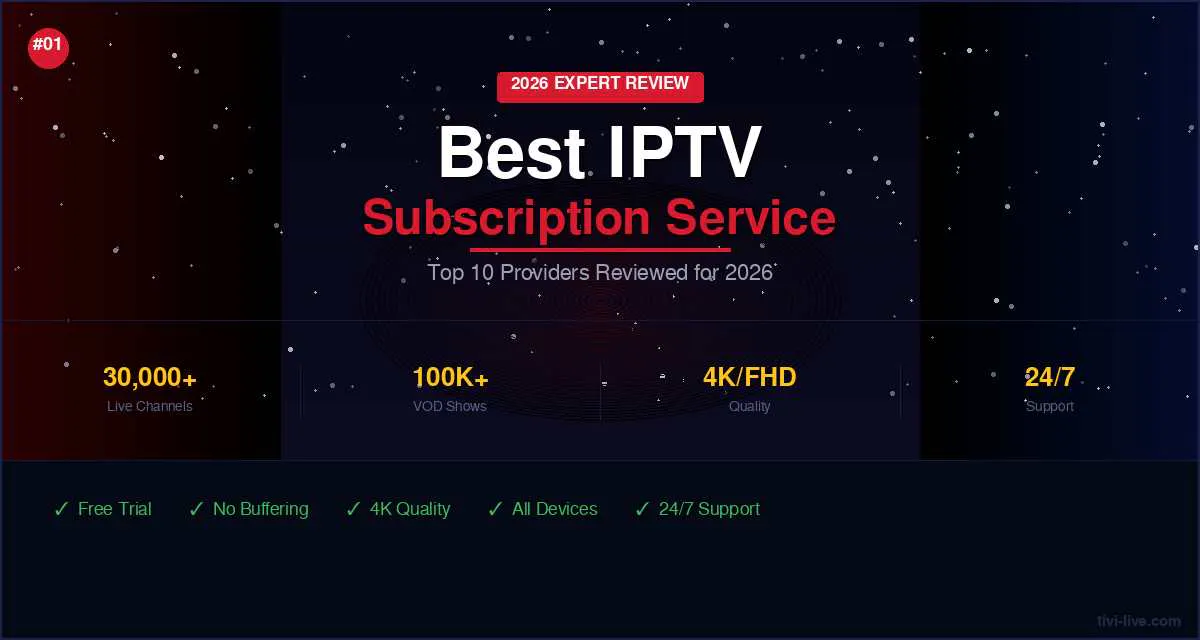
The dashboard image at the top of this article shows what a managed ip-tv provider experience actually looks like: organized categories, clear account settings, and a real electronic program guide. Notice how different that is from a chat-only setup. That contrast matters more than any slogan. Below, we break down the five most persistent IPTV myths, compare them with reality you can verify yourself, and give you a checklist that filters out the noise.
Why Misconceptions Damage Results
Misconceptions are not harmless opinions. They change how people spend money.
Take the "all IPTV is illegal" myth. It makes cautious viewers ignore a legal service that could cut their bills in half, simply because the delivery method is the same one used by pirate services. Or the "always buffers" myth, which convinces someone to accept subpar quality when the actual problem was a router that needed a reboot and a two-minute configuration change.
If you spend enough time on forums like the ip-tv provider reviews reddit threads, you see the same pattern: angry customers blaming providers for problems that disappear when they test a different device or connect via Ethernet. Misunderstanding leads to wasted money, unnecessary frustration, and a cycle of switching services every few months.
Myth 1: "IPTV Means Illegal Cable"
What people say
"IPTV is just stolen cable in a modern wrapper. The moment you sign up, you're on the wrong side of the law."
The reality
IPTV stands for Internet Protocol Television, which is simply a technology for delivering television signals over IP networks. By that definition, the streaming app of your internet provider, the free TV app on your phone, and your favorite digital cable option are all IPTV. There is nothing inherently illegal about the protocol.
A legitimate ip-tv provider works like any serious subscription service: it licenses content, publishes transparent terms, provides an invoice, and operates customer support. You can buy IPTV legally from telecom companies, app stores, and independent services that show evidence of distribution agreements. The legal question is service-specific, not technology-based.
The reason the myth still lives is that the gray market constantly re-creates itself. A service offering every conceivable channel for a one-time payment sounds like the best deal on earth — until it disappears after the first payment processor flags it. That experience pushes people to conclude that all IPTV is a trap. The reality is more subtle: IPTV is a delivery method, and responsibility sits on the provider's shoulders, not on the technology.
Ask where to buy ip-tv legally and you get a simpler answer than forums suggest: buy where a real company exists. Look for a public website with terms of service, a verifiable payment flow, and support that answers before you purchase. Those signals separate a legitimate business from a temporary operation.
Myth 2: "A Cheap IPTV Subscription Is Always a Scam"
What people say
"If it's cheap, it's fake. Real IPTV costs real money."
The reality
Cheap is a relative word. Compared with a $120 cable bill, almost every independent IPTV subscription looks cheap. That is why dismissing a service based on price alone makes no sense.
The better question is: what are you actually paying for? A cheaper plan usually limits you to one connection, a smaller channel group, or no sports in UHD. If those limitations match your viewing reality, you can get a perfectly good cheapest ip-tv subscription. The real scam detector focuses on behavior, not price: anonymous Telegram sellers, crypto-only payments, "lifetime for $20" promises, and no way to reach support outside of app chat.
Try this mental filter: if the provider behaves like a vending machine in a dark alley, you don't buy, no matter how attractive the number. If it behaves like a company — with a website, terms, a trial, and a support desk — you can consider the offer with your eyes open. No contract is suspicious by itself. The only thing that matters is whether you can verify the product before committing.
Myth 3: "IPTV Always Buffers and Freezes"
What people say
"You will never finish a match without watching the spinner."
The reality
Buffering is a technical symptom, not a personality trait of IPTV. Every streamed service on earth buffers when data cannot arrive fast enough.
The most common causes are: a congested Wi-Fi network, an old device without hardware video decoding, a server endpoint far from your location, or a service that oversubscribes its own servers. The first three are either in your control or part of the provider's infrastructure design.
Modern providers invest in adaptive bitrate technology, which continuously measures your connection and picks the highest stable video level. That is why a stream may jump from 1080p to 720p and back again during a live event — the player is protecting the viewing experience, not failing.
Your goal of finding a reliable ip-tv provider no buffering is achieved the same way quality is proven everywhere: by testing. Use the trial on the same device you intend to use daily, from the same network location, at the busiest TV hour in your home. If the picture holds on Ethernet and fails on Wi-Fi, the provider is not the problem. Fix the network and enjoy the service.
Myth 4: "You Need a VPN to Use IPTV"
What people say
"Never run an IPTV app without a VPN. Your ISP will throttle everything."
The reality
VPN advice for IPTV is one of the oldest pieces of forum wisdom, and one of the most incorrectly applied.
A VPN encrypts your traffic and routes it through a server in another location. It helps privacy and can bypass regional restrictions. But it also adds latency. Routing a 4K sports stream through a server two countries away can turn a smooth match into a buffering nightmare. For live content, extra latency is the last thing you want.
Most legal IPTV providers do not require a VPN. Some block VPN IP addresses entirely because of fraud protection or content restrictions. The best practice is to ask the provider directly: "Do you allow VPN connections? Which server regions work with VPNs?" The answer reveals more about the infrastructure than any general rule.
When you are learning how to choose an ip-tv provider, treat VPN as an optional layer, not a default requirement. Test both with and without it. You may find that your results improve significantly without the extra hop.
Myth 5: "IPTV Instantly Replaces Cable TV for Everyone"
What people say
"Cancel the cable box today. IPTV is a complete replacement with no downsides."
The reality
"Cancel cable today, IPTV will replace everything" is a slogan, not a plan.
The truth is that IPTV is a perfect cable replacement when two conditions are met: your internet connection can carry the load, and the content you care about is available on the service. If you live in an area where broadband tops out at 10 Mbps, a 4K IPTV package will only frustrate you. If your favorite local sports team is locked to a regional broadcast agreement, no provider can legally bypass that.
Most IPTV subscribers happily replace cable because they watch international channels, documentaries, and niche sports. For a household that wants simple live television without troubleshooting, cable remains a comfortable choice. The comparison between iptv service vs cable tv is really a comparison between your internet quality, your willingness to install apps, and your tolerance for occasional troubleshooting.
This myth is harmful because it sets unrealistic expectations. The right perspective: IPTV is a better tool for many homes, not a magic wand for all homes.
IPTV Service vs Cable TV: The Honest Trade-Off
To keep the debate grounded, here are the practical benefits and limitations of running an IPTV service in a typical household.
✓ Benefits & Pros
Price: most subscriptions cost a fraction of cable bundles.
Flexibility: you choose channels by country, language, or sport.
Multi-device: watch on smart TV, phone, tablet, or PC.
Features: EPG, catch-up TV, VOD, and recording options.
No long contracts: month-to-month is common.
✗ Limitations & Cons
Internet dependency: if the connection fails, TV fails with it.
Provider quality varies widely across the market.
Support can be slow: not all services offer phone or 24/7 chat.
Setup effort: apps, credentials, EPG configuration, updates.
Regional rights: some local channels may be missing.
RECOMMENDED RESOURCE
ip-tv provider
Read independent network latency reviews and hardware specs.
Find Out More About ip-tv provider →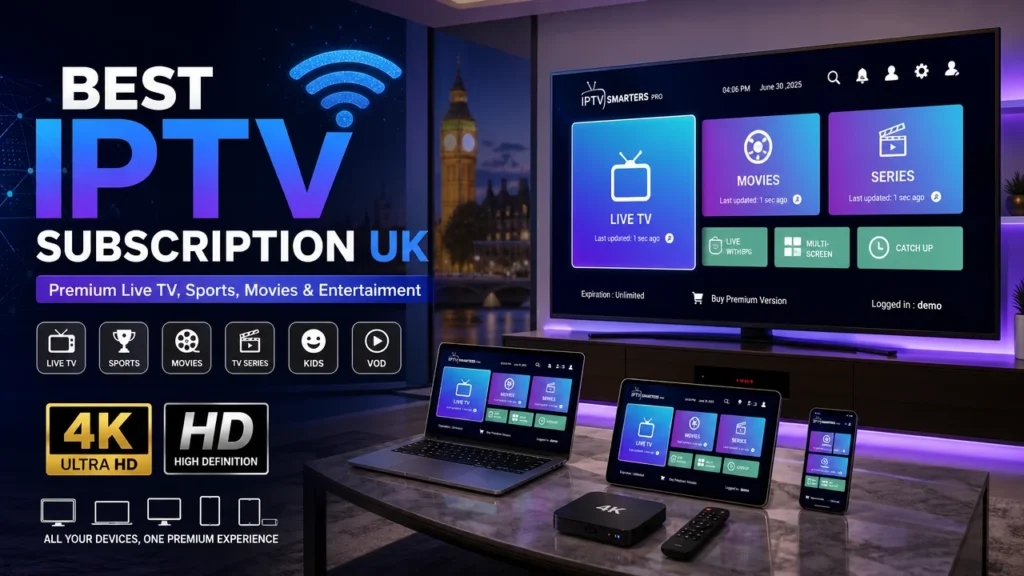
What a Live Sports Test Really Tells You
Live sports are the strongest test of a provider. The image above shows why: a UHD match has no room for re-buffering. The stream must keep moving at full speed or the experience collapses.
If you are searching for an ip-tv provider for sports, your priority list should look different from someone who only watches news. Channel count and VOD library matter less than server latency, local peering, and the ability to handle high frame rates during peak hours. Some of the best ip-tv provider 2026 discussions center on sports precisely because sports expose every infrastructure weakness.
Use the trial window to watch the second half of a live match on a big screen, not a VOD recording. If the stream holds its quality during peak evening hours, the provider has already proven more than any review could say.
What Actually Works Based on Evidence
People who get the best results from IPTV follow a similar process. Separate fact from flexible marketing claims by applying this checklist before you hand over money.
- Start with a trial or one-month plan. Never commit a year to a service you haven't watched on your own network.
- Test on the device you'll actually use. A stream that runs smoothly on a laptop may look different on a smart TV app or an Android box.
- Check server regions. Customers in Europe, Latin America, and Asia need local servers; an overseas endpoint will cause lag.
- Confirm the EPG and catch-up features. A well-populated electronic program guide is the difference between a TV service and a file folder.
- Examine support channels before payment, not after. Send a test message and measure the response time.
- Read recent ip-tv provider reviews reddit threads with a filter. Look for repeated billing or support complaints from different accounts, not one-off stream complaints.
- Compare packages against your real watch list. Sports, international news, kids' content, or VOD — not the raw channel number.
- Keep the subscription length realistic. Longer commitments save money but raise risk if the service degrades. Balance them on your first purchase.
Popular Belief vs Reality: The Comparison Table
Here is the entire myth-busting argument in one glance.
Review up-to-date regional server maps and infrastructure before choosing a long-term plan.
View the ip-tv provider Platform →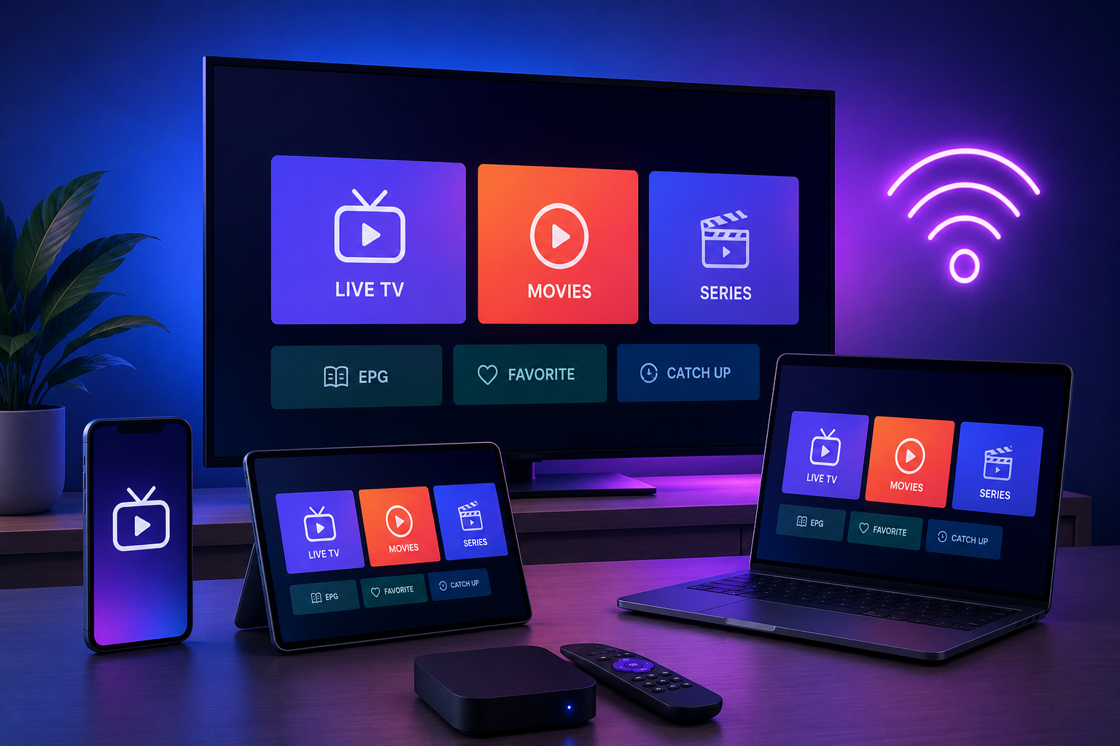
Hardware: The Quiet Half of the Equation
Hardware is the most underrated factor in the IPTV experience. The setup shown above — a smart TV, a streaming box, and a capable router — looks simple, but device differences matter enormously. A 4K stream that runs smoothly on a modern Apple TV or an NVIDIA Shield may stutter on a low-end Android stick without hardware decoding.
Before subscribing, check the compatibility list. If the provider has a dedicated app for your TV's platform, life becomes simple: install, log in, watch. If you are forced into a generic player, account for that extra step during your trial. Your hardware choices explain more about stream quality than most assumptions about IPTV itself.
The Bottom Line
The shortest path from confusion to a working HD stream is a trial. Every serious service lets you sample the product for a day or a week. If a provider refuses to test its own service, that refusal is the review.
Remember that the label "best ip-tv provider 2026" will never be a universal fact. It always depends on your region, your device ecosystem, and the way your household watches television. Use the checklist above, ignore the mythology, and decide based on the picture you see on your own screen.
Featured Streaming Selection:
See ip-tv provider Pricing →Affiliate Disclosure: Clicking this secure link verified by our network supports our team through standard partnership terms at zero extra cost to your invoice.
Frequently Asked Questions
This article contains affiliate links. Our editorial analysis remains independent.