By Marcus R. · Updated 2026-08-15 · 9 min read
It always happens at the worst moment. The striker is in front of goal, the stream freezes, and you are staring at a pixelated mess while your neighbours cheer. You paid for iptv services, your internet plan is 300 Mbps, and the channel still buffers. If that sounds familiar, the problem is probably not your internet speed — and it might not even be your provider.
In my years setting up IPTV for friends, family, and clients, almost every "IPTV not working" case comes down to three predictable causes: a network path issue, a player configuration problem, or a provider that has oversold its servers. Each has a clear fix. This article walks you through them in the order that solves the most frustrating problems first.
The screen above looks like a normal IPTV dashboard — and that is the trap. A clean interface tells you nothing about the server feeding it. The fixes that actually work happen before you even open the app.
The 3 Most Common Mistakes That Break iptv services
Mistake 1: Picking a Service by Channel Count Alone
A provider that lists 22,000 channels can still buffer on every single one. Channels are cheap to list; servers are not. Reliable iptv services spend money on upstream links, local CDN nodes, and redundant portals. Many sellers simply resell a panel from a larger company without controlling any infrastructure. When thousands of customers watch the same sports event at once, a weak server buckles — and you blame your Wi-Fi.
Mistake 2: Using Default Wi-Fi and DNS Settings
Most IPTV buffering is actually a network path problem. Your TV sits two rooms from the router, and the Wi-Fi signal looks fine — yet live streams need constant throughput and low jitter. Default ISP DNS can also send your device to a congested server, especially at night. Switching to a public DNS like Cloudflare 1.1.1.1 is a two-minute change that often fixes invisible routing issues.
Mistake 3: Testing at the Wrong Time of Day
Every provider looks flawless at 9 AM. The real test happens between 7 PM and 11 PM, when your region and another region are watching the same live event. People who judge a service on a five-minute afternoon test are the ones complaining during weekend football matches. A trial is not a formality; it is the actual proof.
Why the Usual Fixes Don't Actually Fix IPTV
Restart the router. Reinstall the app. Lower the resolution to 720p. Those are the three standard recommendations you will see anywhere, and they rarely change anything for more than a few minutes. Restarting only refreshes the network connection — the server is still the same, and the route is still the same. Lowering the resolution reduces the amount of data, but it does not make the connection stable.
The setting that matters most is the buffer size in your playback app. A small buffer means the player drops the stream the moment packets arrive late. A large buffer gives the player enough data to keep the stream moving during a short network hiccup. Default settings in many apps are too small for live television, which is why the stream freezes right in the middle of a tense moment.
What Experienced Users Do Differently With iptv services
People who have been using IPTV for years do not constantly change providers. They treat IPTV like a small engineering problem — plan the network, configure the player once, then choose a provider after a proper test. Here is what they do:
- They ask for a 24-hour trial and test it at 20:00 on the channels they actually want — sports, local channels, or international channels.
- They measure ping and jitter, not just download speed. Download speed is rarely the deciding factor in IPTV.
- They wire the main TV with Ethernet before testing any provider technically.
- They read recent iptv services review 2026 comparisons and cross-check them with real user comments on independent forums.
- They keep a backup portal URL from the provider so that when one server gets overloaded during a big fight night, they have a second route in.
How to Fix IPTV Freezing and Buffering: Step-by-Step Plan
Do these in order. Each step solves a specific failure point, and you will know exactly where your problem lives by the time you finish.
Step 1 — Measure the right numbers. Run a speed test on the actual streaming device with an Ethernet cable connected, not on your phone over Wi-Fi. Pay attention to jitter and packet loss. If jitter is consistently above 15 ms, your network is the problem, not the provider.
Step 2 — Connect the TV to the router with a cable. Ethernet is the single largest improvement for live streaming. If the router is far, use powerline adapters; they are far more stable than Wi-Fi through walls, especially in family houses where several devices share the same signal.
Step 3 — Update the player and increase the buffer. If you are using a free generic player, switch to TiviMate, IPTV Smarters Pro, or the provider's native app for your device. Find the buffer setting and set it to Large or Very Large. Do not leave it on the default value if the option is available.
Step 4 — Change DNS on your router or device. Manually set primary DNS to 1.1.1.1 and secondary to 1.0.0.1, or use 8.8.8.8 if you prefer Google. This stops your ISP from routing IPTV traffic through an overloaded local DNS cache.
Step 5 — Test at the exact time you normally watch. Do the trial in the evening and, if possible, during a live match. A provider can be excellent in the afternoon and fail at 21:00. Also open two different channels at the same time to see if the issue is channel-specific.
Step 6 — Check device storage and background apps. On a Fire Stick or Android box, low storage causes crashes and freezes that people mistake for buffering. Delete unused apps and disable background refreshes. For 4K sports, a device with at least 2 GB RAM and hardware decoding for H.265 makes a visible difference.
Step 7 — If the provider fails the test, switch. Run the same test with the next provider before paying anything. Trust the results of your trial, not the screenshots in their advertising.
Realistic Results to Expect After the Fixes
With these fixes, the typical experience changes from "freezes every few minutes" to "freezes once or twice in an evening of watching." The remaining hiccups usually come from the source feed itself, or from extreme demand during a global sports event.
4K streams are the most demanding: you need a device that can decode them and a connection with consistent throughput. If you are watching iptv services for international channels from another continent, allow 2 to 4 seconds for the channel to change, and expect the EPG to take a few minutes to catch up. That is normal, not a sign that the provider is lying to you.
Pitfalls to Avoid So You Don't End Up Where You Started
- Paying for 12 months before a trial. The annual discount feels smart, but the risk is not worth it.
- Trusting "lifetime" subscriptions. IPTV requires ongoing server maintenance; nobody can honestly guarantee a lifetime.
- Installing APKs from random websites. This is how devices get infected with advertising and data-harvesting code.
- Sharing one connection across five devices simultaneously. Many providers lock concurrent streams and may block the account. Get a family plan instead.
- Blaming the provider for source failures. Sometimes the broadcaster's own signal is distorted. Ask support whether the channel has a source issue before cancelling.
What Works vs. What Doesn't for iptv services
The truth is simple: most IPTV problems follow the same pattern. Fix the connection, fix the player, and then choose a provider that survives the peak-time test. Once you do that, the comparison charts on sales pages become far less important.
✓ Benefits & Pros
Usually cheaper than a traditional cable package
No long-term contract or installation visit
Works on TV boxes, Fire Sticks, phones, and tablets
Access to premium sports, local, and international channels
Affordable iptv services for families usually include multi-screen plans
✗ Limitations & Cons
Quality varies by time of day and source feed
Legal status varies by country and content rights
Providers can disappear without notice
Requires setup — not as simple as plug-and-play cable
Support response can be slow during major live events
RECOMMENDED RESOURCE
iptv services
See current details, seasonal promos, and full tier packages on the official comparison page.
Learn more about iptv services →How to Find Reliable iptv services in 2026
If this is your first time buying, the search process matters as much as the subscription itself. When you find a candidate, compare what the provider controls: server infrastructure, local CDN presence, and backup URLs. The best iptv services for sports, for example, are the ones that stay stable during a major fight or a Champions League night — not the ones with the largest catalog.
- Narrow it down to three potential providers. Do not pick one from a random comment section.
- Request a 24-hour trial, then run the exact test from Step 5: peak time, live channel, multiple screens if possible.
- Send a support question at 10 PM and see how long it takes for a real reply. Support speed predicts server quality.
- When comparing prices, include the hidden costs: an Ethernet adapter, a better playback app, or a VPN if your ISP is throttling streaming.
Where to Buy iptv services Safely
Buy through the provider's official checkout page, and use a payment method that gives you some protection if the service disappears. Avoid sellers on Facebook, eBay, or Telegram who only accept untraceable payments. If the price is significantly lower than the market average, treat that as a warning, not a victory. A legitimate service with iptv services with local channels and transparent support usually has a proper signup flow and a clear refund policy.
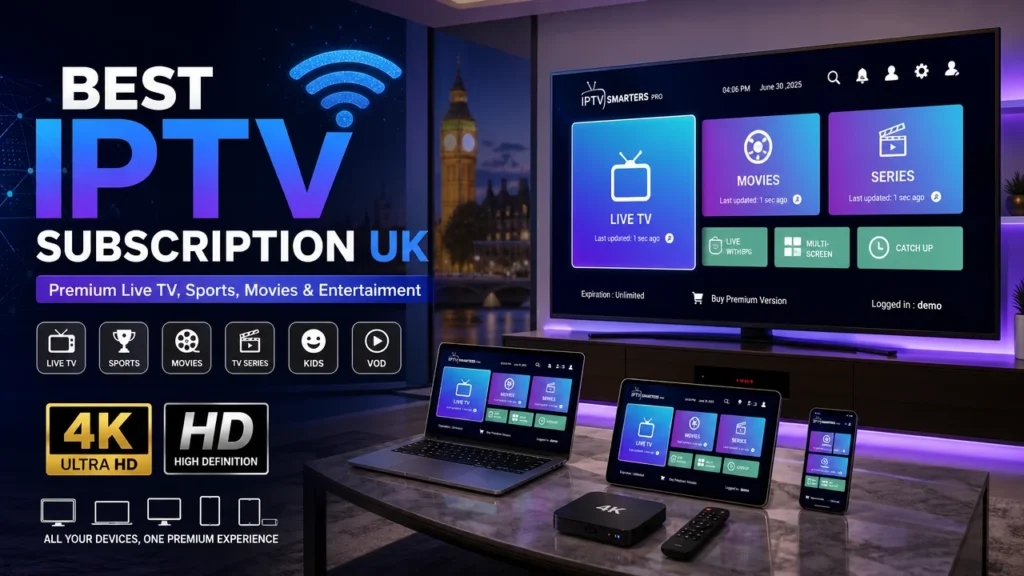
The image above is what a mature sports package looks like in practice. Notice the details: a clean EPG, multiple live categories, and a consistent interface. None of that proves the service is reliable, but it tells you the provider invested in the player experience rather than just selling access to a shared server list.
What Pushes iptv services to the Next Level
Once the basics are done, the difference between a fragile setup and a robust one comes down to details. For families, that means choosing a package with enough simultaneous connections for the TV and the kids' tablets. For sports fans, it means checking that the provider carries the right national and regional sports networks. For people who travel, it means verifying that the service works on the VPN or mobile network you use abroad.
Ready to compare providers based on the details that actually matter? Start with the current iptv services lineup and check which plans include trials, backup portals, and family multi-screen options.
Explore iptv services Plans →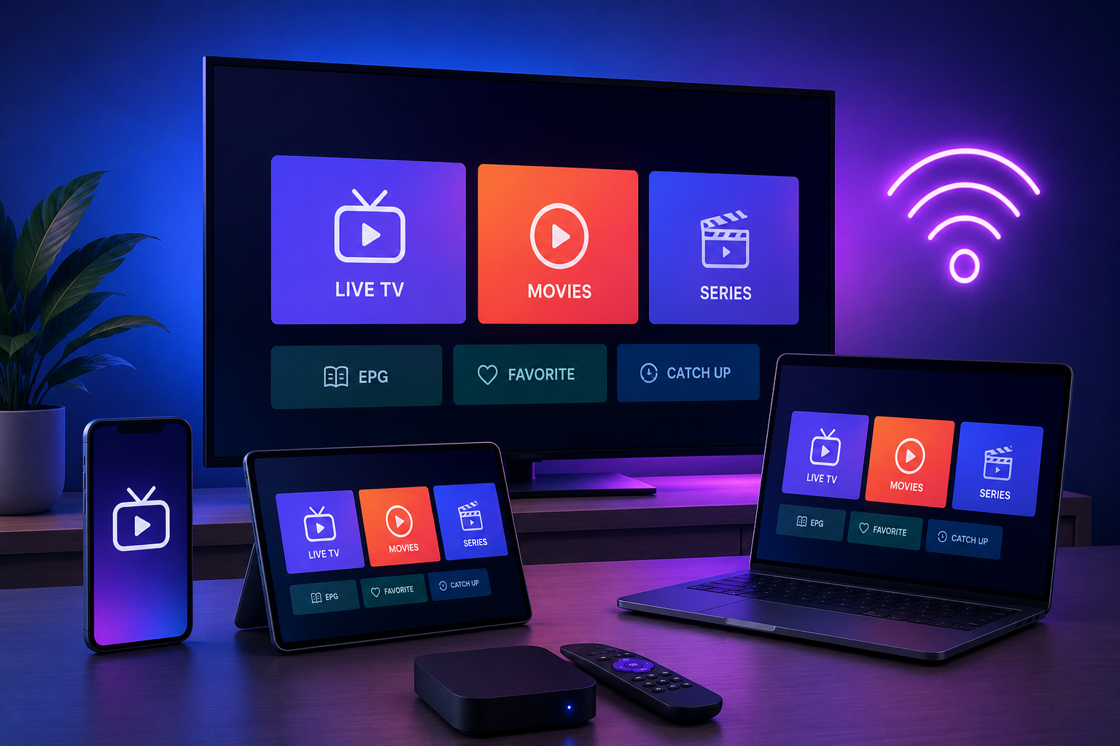
One final visual: the connection path. In almost every setup I've debugged personally, the difference between a frozen channel and a smooth one was not the provider's rank in a list — it was the literally invisible choice between Wi-Fi and Ethernet. The comparison above explains why even a modern router can deliver unstable IPTV if the Wi-Fi signal travels through walls and interference.
Bottom Line
IPTV freezing is rarely a mystery. Check the network path, set the player buffer, test at peak time, and only then judge the quality of the provider. That four-part sequence has solved more "IPTV not working" cases than any restart or provider switch. Once you have done that, you are ready to choose a subscription with your eyes open, instead of hoping a flashy channel list will save you.
Featured Streaming Selection:
View the iptv services Platform →Affiliate Disclosure: Clicking this secure link verified by our network supports our team through standard partnership terms at zero extra cost to your invoice.
Frequently Asked Questions
This article contains affiliate links. Our editorial analysis remains independent.